

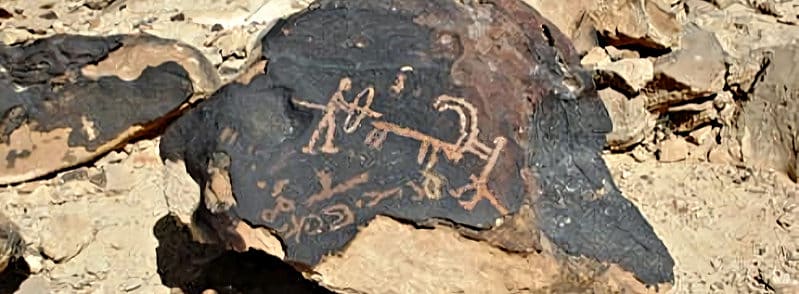
Guardians, not rulers: The theology of Cosmic Protection
The divine Twins appear everywhere— across the Near East, the Mediterranean, and northern Europe—paired figures who protect, guide, and mediate at moments when cosmic order is most vulnerable (West 2007; Kristiansen and Larsson 2005). The Twins were not masters of cosmic forces but their custodians: figures responsible for guiding the sun safely through its passage into the upper world, for holding in balance the vital powers that sustained the agricultural year. In doing so, they uphold what this site's article on the four-line symbol names as the second principle of cosmic order: the anchors binding heaven and earth still in place.
The veneration of divine Twins emerges in the Early Bronze Age and reaches its widest expression during the Middle and Late Bronze Age (ca. 2000–1200 BCE), a period defined by expanding trade networks and the rapid circulation of shared astral and mythological knowledge across the connected world of the eastern Mediterranean (Kaul 1998; Kristiansen 2010). As sea routes connected the Aegean, the Levant, Cyprus, and Egypt, sailors required dependable stellar markers for nocturnal navigation and for determining the seasonal windows when open-sea sailing was safe (McCluskey 1998). Gemini answered both requirements. Positioned along the ecliptic and rising prominently during the safe sailing season, it was one of the most reliable directional markers available to naked-eye navigators.
In rock art scenery, which reflect an ancient belief, the Twins ensure the sun's safe return from its exhaustive nightly passage at dawn. They upholds the third principle of the four-line symbol: "the year's rhythm still turning in its proper order."
The Twins and the Horses: Solar Renewal across Two Traditions
The most vivid expression of Twin theology in the Negev corpus is the horse-and-rider composition that closely parallels a scene from Scandinavian Bronze Age rock art (Fig. 3). To read either scene correctly requires understanding the theological problem both address: in ancient cosmologies, sunrise is not a simple appearance but the beginning of a daily journey. After the sun journey through the underworld, where it was exposed to forces of dissolution— darkness, exhaustion, chaos— the sun was exhausted. It needed help at this fragile moment and the divine twins provided. The Twins enforce the third principle in Four Lines article, that states: the year's rhythm still turning in its proper order.
The Scandinavian panel (Fig. 3, left) deploys horse imagery to render this process with compositional precision. An upper, smaller vessel represents the night phase of the solar journey, carrying exhausted horses whose lowered heads signal the end of the nocturnal ordeal. One Twin guides these weary animals through the final darkness; the other prepares the transition. Below, a larger day vessel harnessed to fresh, vital horses awaits the sun, which appears prominently before them at the moment just before dawn. The two vessels, two states of the horses, two roles of the Twins: everything in the composition is dual, because the solar cycle itself is dual—night and day, exhaustion and renewal, descent and ascent.

The Negev panel (Fig. 3, right) transposes this theology into the local engraving tradition with remarkable fidelity to the underlying cosmological logic. Two riders and two horses are arranged in a deliberate sequential composition that encodes the same transition from night to day. The leading rider hauls the sun toward the horizon, his horse marked by restraint and fatigue— the final strain of the nocturnal passage rendered in the animal’s posture. Following him, his twin raises his arms while guiding a younger, more dynamic horse whose bearing conveys vitality and readiness. The paired riders act together as coordinated agents of cosmic transition, not as competitors and not as independent heroes, but as a single functional unit whose duality is the condition of the renewal they produce.
The cross-cultural parallel between these two panels, separated by thousands of kilometres, is not coincidental. It reflects the circulation of a coherent Bronze Age cosmological programme in which the horse is the vehicle of solar motion, the Twins are its guardians, and the transition between night and day is a managed, regulated process that depends on their coordination. The Twins do not generate the sun’s power; they shepherd it. Their role is custodial, not creative—and the precision with which both the Scandinavian and Negev engravers encode this distinction, through the contrast between exhausted and youthful horses, is the measure of how seriously the cosmological argument was understood (Kristiansen and Larsson 2005).
The Twins and the Ibex: Balance Against Domination
The second Negev panel (Fig. 4) extends the argument into a different compositional register and, crucially, provides the clearest evidence for the theological shift that separates Bronze Age Twin theology from its Classical successors. Two scenes are placed in direct comparison: the Negev engraving on the left, a mosaic from Pella in Macedonia dated to the fourth century BCE on the right. In both, paired figures stand on either side of an animal. The formal similarity is exact enough to invite comparison; the theological difference, once seen, is fundamental.

In the Negev scene, two nearly identical anthropomorphic figures symmetrically flank an ibex and jointly hold it. Their mirrored posture and equal scale identify them unmistakably as a twin unit rather than hunters or attendants. The ibex is shown frontally, upright, and contained between them—neither wounded nor subdued. It is not prey. It is a charged symbolic presence held in balance by two figures whose identical form expresses the equilibrium they maintain.
The ibex in the Negev rock art corpus is a cosmological and fertility symbol associated with seasonal renewal and the winter sky, deriving ultimately from the Orion–Osiris complex in which the ibex encodes the constellation Orion—the dominant marker of the winter night sky, associated with death, the underworld, and the promise of cyclical return (Assmann 2005). To position the ibex between the Twins is to place a force of profound cosmological significance in the custody of the two figures most qualified to hold it: beings who operate at liminal thresholds, who exist precisely to ensure that vital cosmic forces pass safely through the moments when they are most vulnerable. The Twins do not dominate the ibex. They stabilise and preserve it, their shared grip expressing not power over a cosmic force but responsibility for it.
The Pella mosaic shows the same formal arrangement with a fundamentally different theological meaning. The animal is restrained and subdued; its posture conveys loss of agency; divine power is expressed through control rather than equilibrium. By the fourth century BCE, the relationship between the divine figures and the cosmic animal has inverted: what was once guardianship has become mastery; what was once balance has become command. This is not merely a stylistic shift. It reflects a transformation in the underlying cosmological model—from a world in which survival depended on careful regulation of cosmic forces, to one in which divine authority was understood as the capacity to override and subdue them.
Conclusion: Guardians and Masters of Cosmic Order
The two Negev panels, read together, constitute a coherent theological statement about the nature of divine power and cosmic management. The horse-and-rider composition encodes the custodial function of the Twins in the solar cycle: they do not own the sun’s energy but shepherd it through its nightly vulnerability. The ibex composition encodes the same logic applied to seasonal and chthonic forces: the Twins do not master the ibex but hold it in the balance it requires to fulfil its cosmological function. In both cases, divine power is expressed not as dominance but as care, not as conquest but as the sustained maintenance of a fragile equilibrium that the cosmos requires to continue.
The comparison with the Pella mosaic reveals how historically specific this theology was. It was not the only way the Twins could be imagined— the Classical tradition imagined them quite differently— but it was an earlier way, one that preceded the shift from regulation to mastery that accompanied the emergence of the heroic ideal and the divine monarch. The Negev panels belong to a moment before that shift, a moment when the most pressing theological question was not how to conquer chaos but how to keep it from consuming the order that sustained human life (West 2007; Kaul 1998).
What makes the Negev material exceptional is not simply that it preserves an older theology— the Scandinavian parallels show that this theology was widespread—but that it does so with unusual compositional clarity. The exhausted and vital horses, the upright and contained ibex, the mirrored and equal figures: each formal choice is a precise argument about what the Twins are for. Engraved in desert stone at the southern edge of the Bronze Age connected world, these panels record a cosmology in which survival depended not on conquering the forces of night and season but on keeping them alive, balanced, and in motion— tended, generation after generation, by two figures whose defining characteristic was not power but the wisdom to know that some things must be held, not broken—exactly the principles expressed in the four-line symbol.
Related reading
Bibliography
Assmann, Jan. 2005. Death and Salvation in Ancient Egypt. Ithaca: Cornell University Press.
Kaul, Flemming. 1998. Ships on Bronzes: A Study in Bronze Age Religion and Iconography. Copenhagen.
Kristiansen, Kristian. 2010. “Rock Art and Religion: The Sun Journey in Indo-European Mythology and Bronze Age Rock Art.” In Representations and Communications: Creating an Archaeological Matrix of Late Prehistoric Rock Art, edited by Åsa C. Fredell, Kristian Kristiansen, and Felipe Criado Boada, 93–116. Oxford: Oxbow Books.
Kristiansen, Kristian, and Thomas B. Larsson. 2005. The Rise of Bronze Age Society: Travels, Transmissions and Transformations. Cambridge: Cambridge University Press.
McCluskey, Stephen C. 1998. Astronomies and Cultures in Early Europe. Cambridge.
West, M. L. 2007. Indo-European Poetry and Myth. Oxford: Oxford University Press.
© All rights reserved. This material may not be published, broadcast, rewritten, or redistributed in whole or part without the express written permission of negevrockart.co.il
Yehuda Rotblum (2020)
